
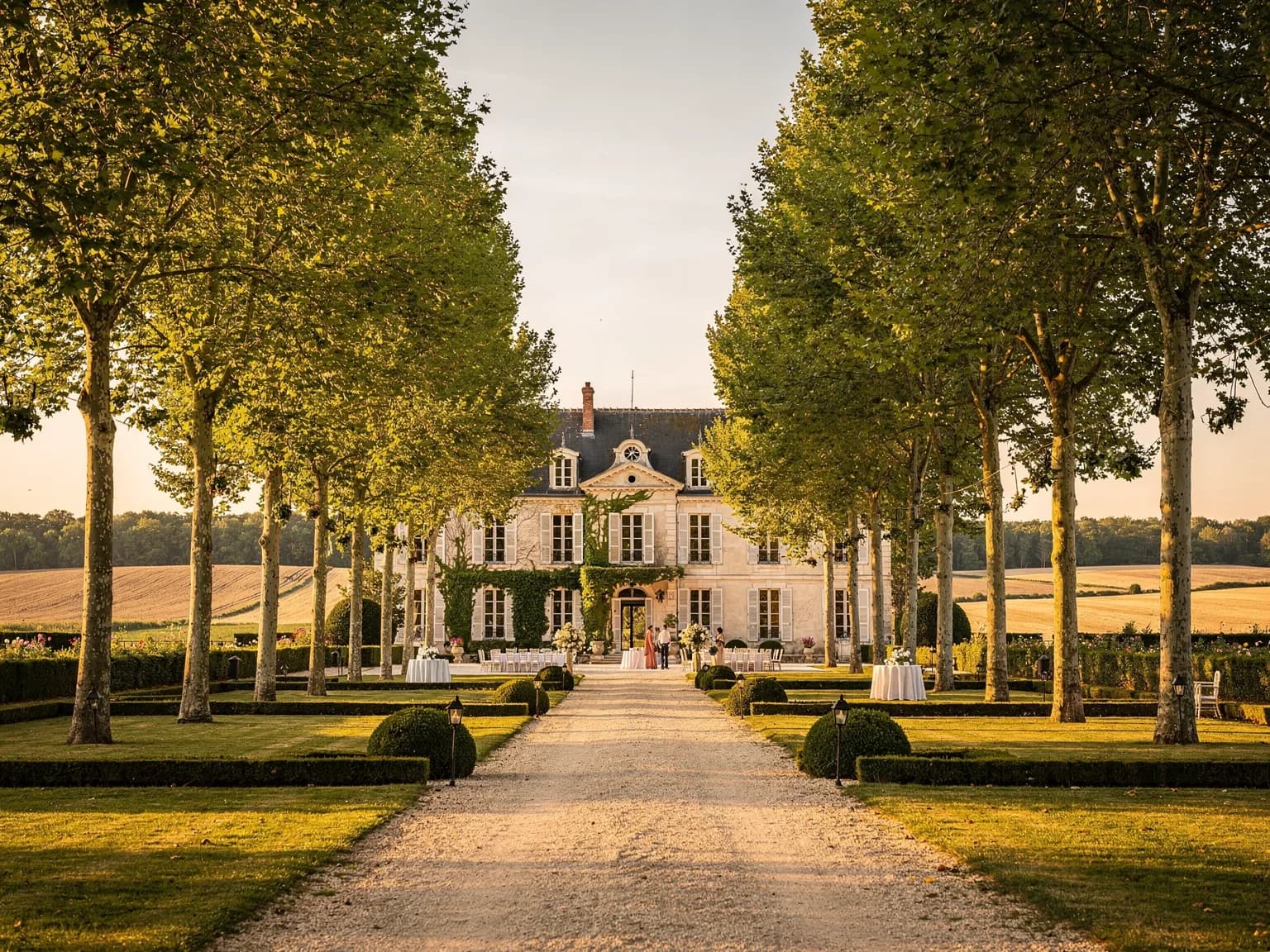
Wedding Estates in the Paris Region: How to Choose the Right Venue (and What It Changes for Your Photos)
Châteaux in the Yvelines, Briard farmhouses, the banks of the Marne: a photographer's guide to choosing your wedding estate in the Paris region — visit criteria, light, logistics and the questions to ask before signing.
Why an estate rather than a function room
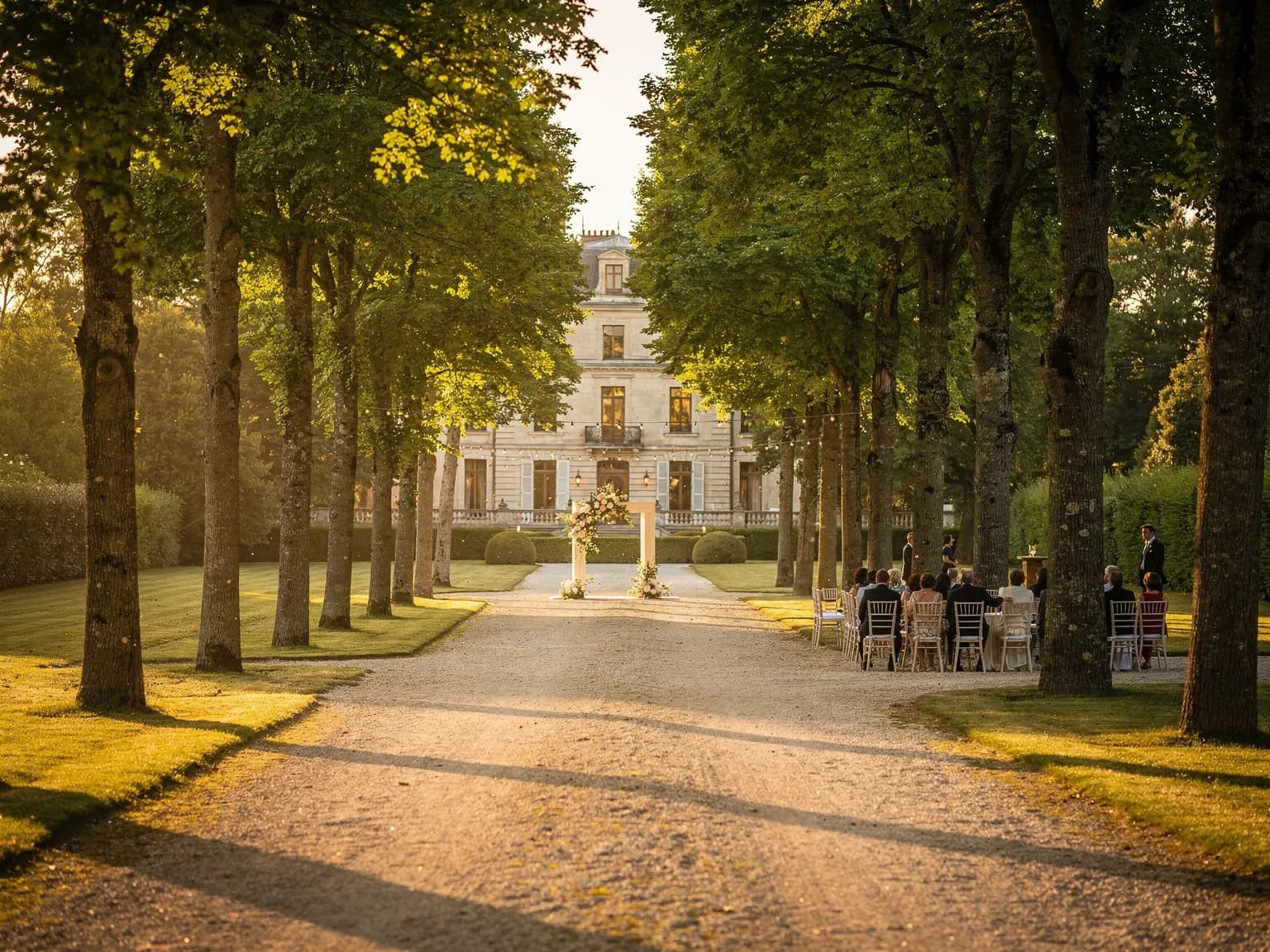
The maths many Paris-region couples do is simple: for a comparable reception budget, an estate gives you the whole venue where the city gives you a room. Outdoor ceremony in the grounds, cocktails on the terrace, dinner in the barn or the orangery, everything follows on in one place — and that unity of place concretely changes your day and your images.
- •No transfers between key moments — the schedule breathes, surprises get absorbed, and nobody spends an hour in traffic in a wedding dress.
- •Light you can follow — on a single venue, the photographer follows the day's light instead of chasing it; golden hour happens at the right moment, not when the shuttle arrives.
- •Space for guests AND images — wide shots, clean backgrounds, quiet corners for portraits: space is a photographic luxury as much as a logistical one.
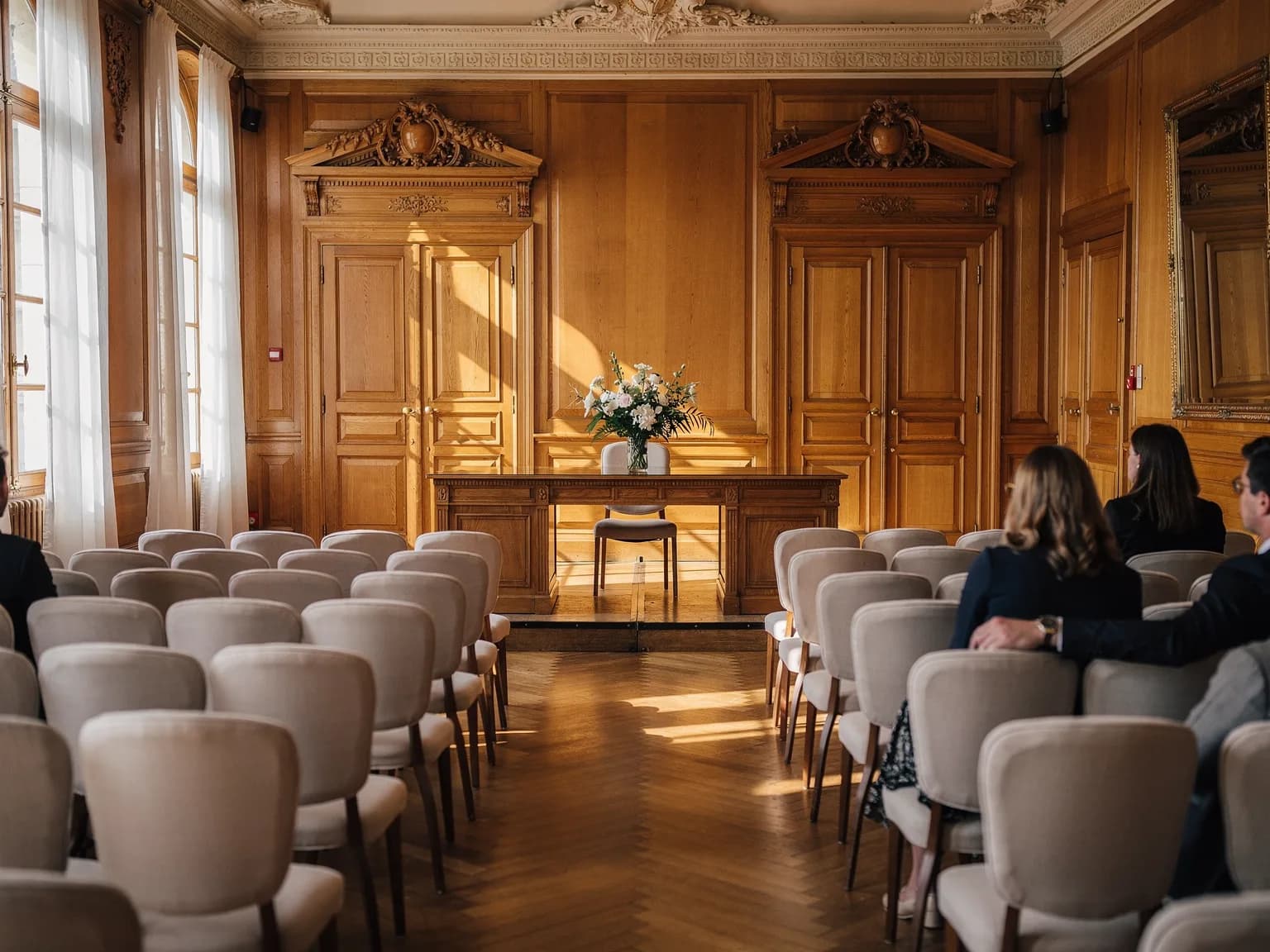
The most common sequence remains town hall then estate: civil ceremony in your commune, reception a few kilometres away. The coverage includes both — the typical flow is detailed on the Paris-region wedding photographer page.
The Yvelines: châteaux and great grounds
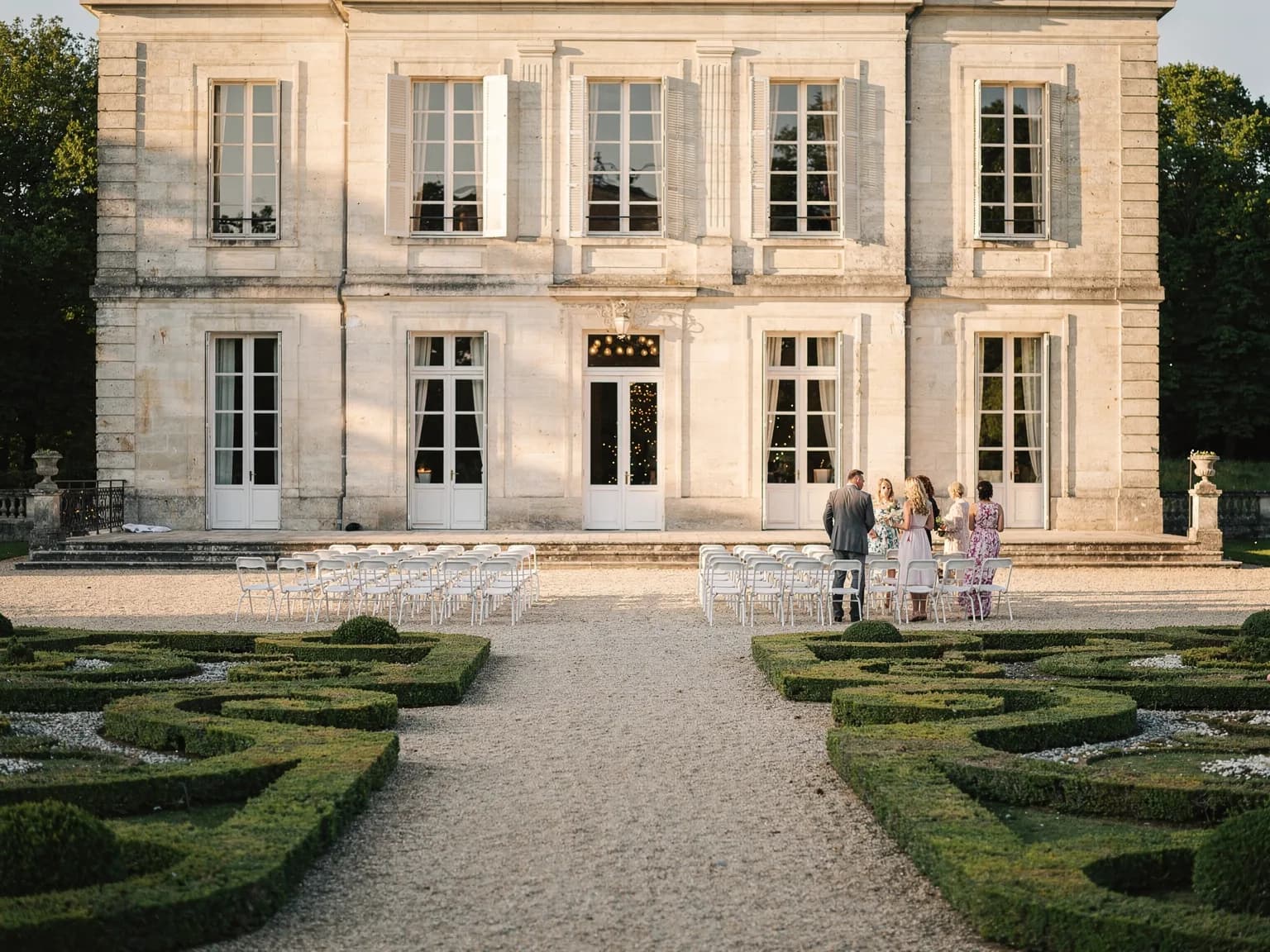
The west of the region concentrates the grand-classical reception venues: châteaux with grounds, family estates, orangeries. It is the backdrop that photographs "from afar" — perspectives, staircases, façades — giving images an architectural depth few regions offer within an hour of Paris.
- •Versailles and its surroundings — the royal city and the western Yvelines have their own coverage page: wedding photographer in Versailles.
- •Visit time counts double here — west-facing façades glow at the end of the day but flatten portraits at noon; visit at the hour of your ceremony.
- •Beware national domains — a museum-château is not a hireable estate: professional sessions there fall under the site's regulations and prior authorisation.
- •The rest of the department and the north of the region — beyond Versailles, coverage notes are on the Yvelines wedding photographer page and the Val-d'Oise wedding photographer page.
Seine-et-Marne: Briard farmhouses, barns and forest
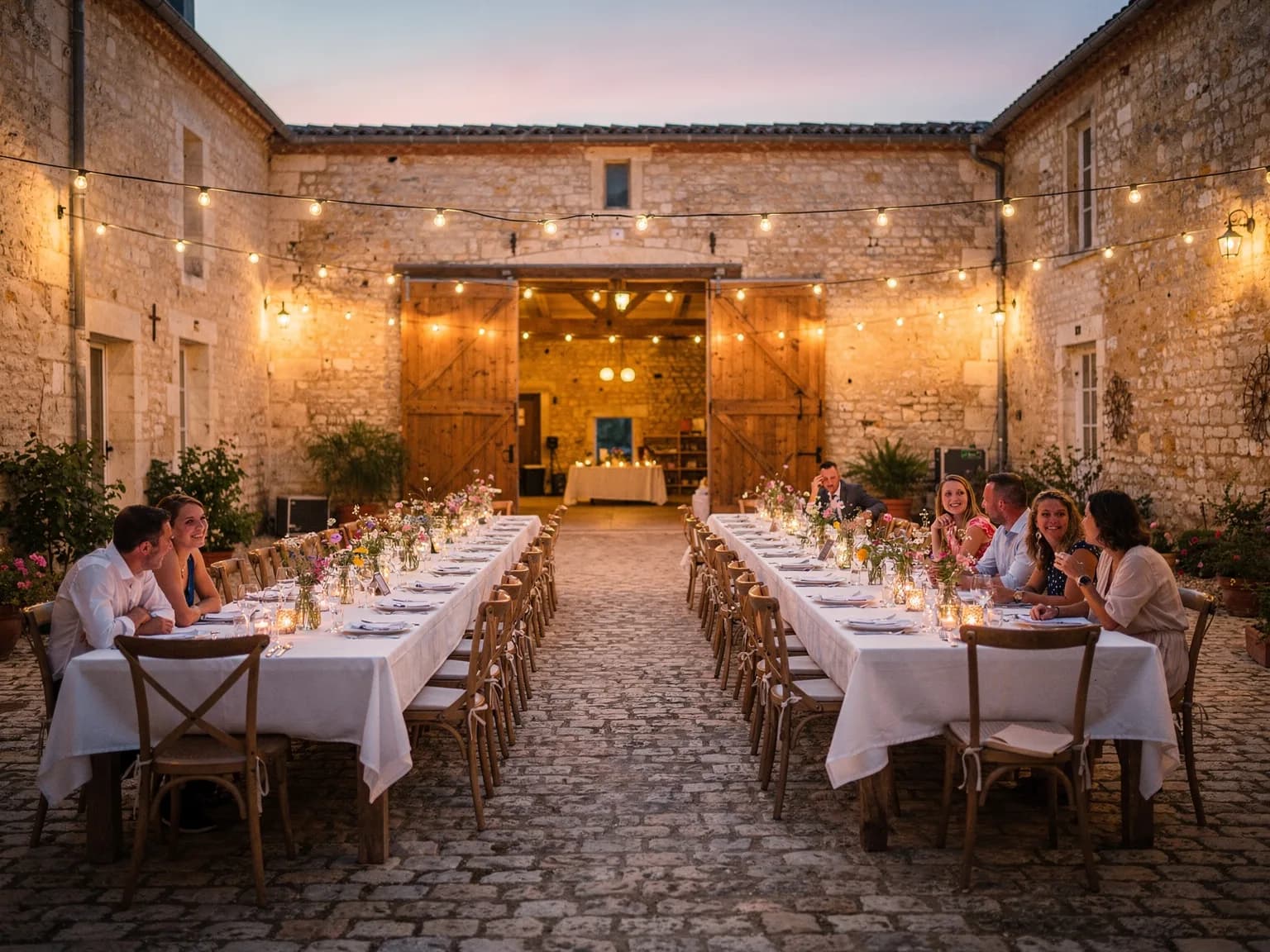
The region's largest department is also its most rural, and that is its strength: Briard farmhouses, tithe barns, estates isolated in open countryside. The rustic style here is authentic — real beams, real cobbled courtyards — and the south of the department adds Fontainebleau, its forest and Barbizon as session backdrops.
- •The 77 in detail — venues, distances and the department's specifics are on the Seine-et-Marne wedding photographer page.
- •Fontainebleau forest for couple sessions — boulders, rocky plateaus, open woodland: one of the region's most photogenic natural settings, minutes from many estates.
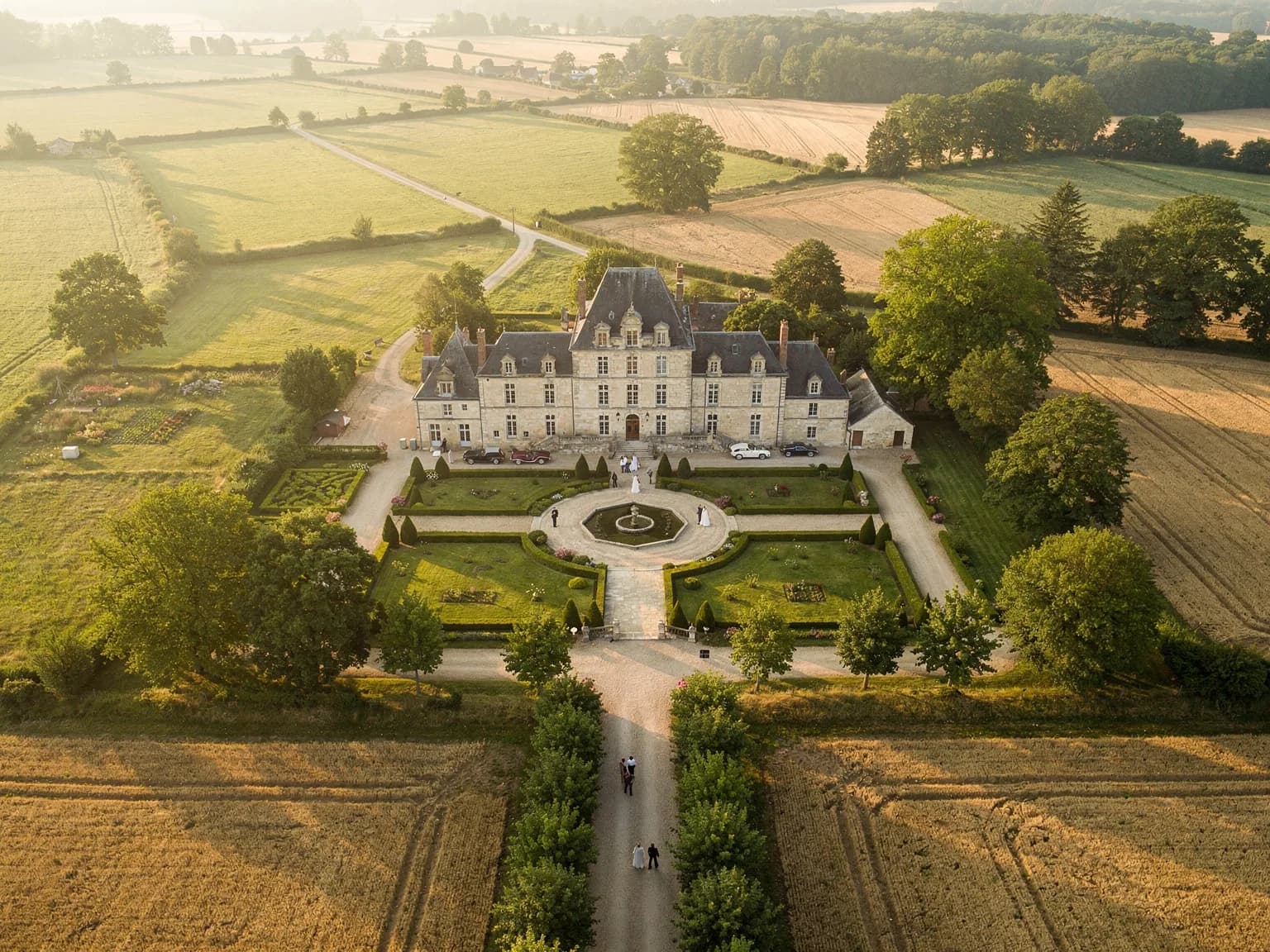
- •Large isolated estates are the best candidates for aerial views — under regulatory conditions, checked venue by venue.
- •Further west, Essonne — the south of the region continues into the 91: how a day is covered there is on the Essonne wedding photographer page.
Southern 77 landmarks: Fontainebleau · Barbizon · Provins (UNESCO) — public places, not private hire
The banks of the Marne and guinguettes: the convivial option
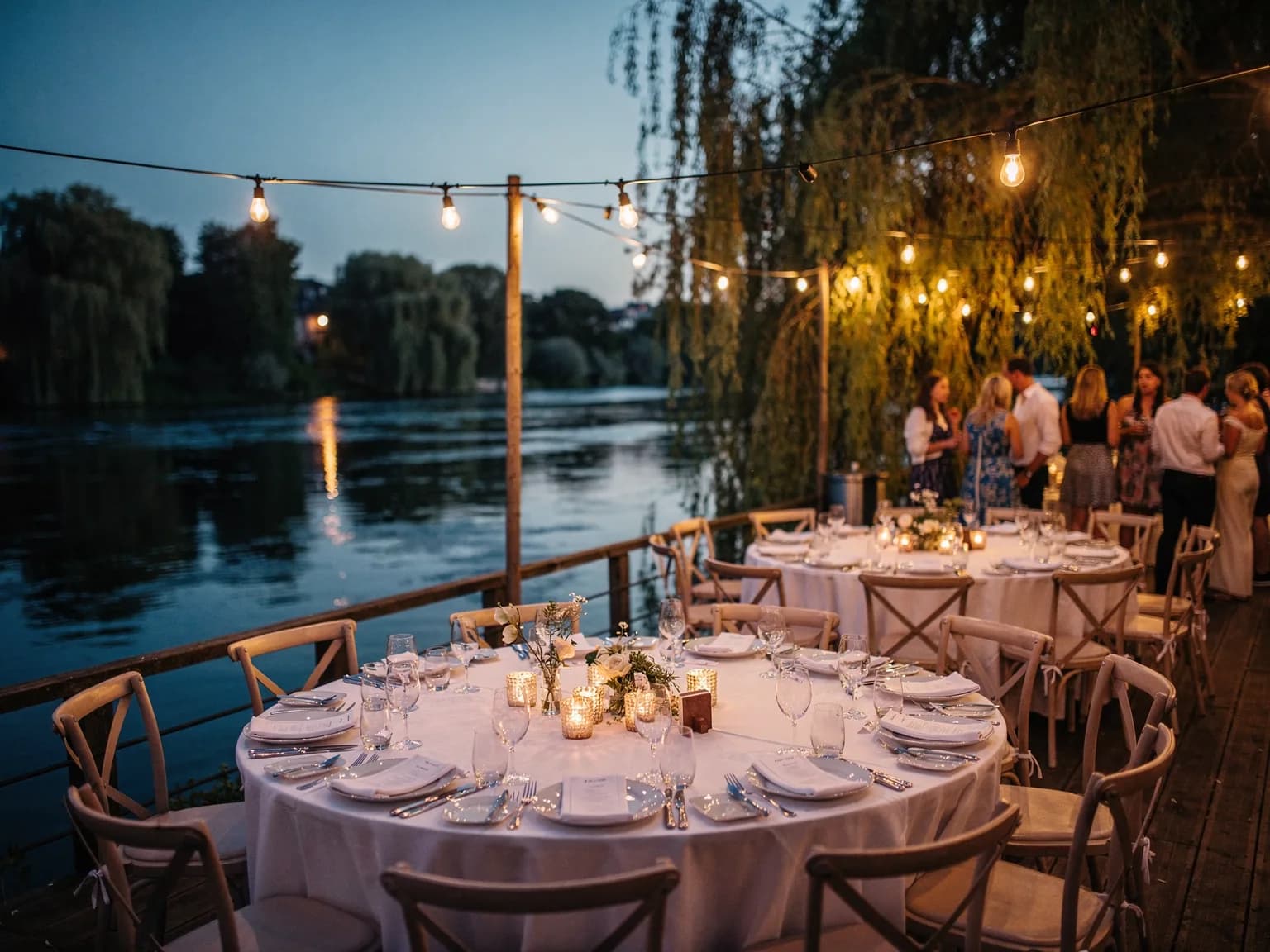
Between the grand château and the country farm there is a very Paris-region third way: the waterside reception. From historic guinguettes to terraces on the Marne, these venues carry a conviviality that shows in the photos — and an end-of-day light, skimming the water, that photographers wait for all season.
- •The light skims the water late in the day — plan couple portraits for that moment, not during dessert.
- •Often more compact than an estate — table plan and dance floor need early thought to keep clear shooting angles.
- •A real rain plan B is essential — waterside charm has to be earned; check the actual covered area, not the brochure's.
- •On the Val-de-Marne side — for a reception on the Marne in the 94, the day's flow and prices are on the Val-de-Marne wedding photographer page.
The criteria that really matter on a visit
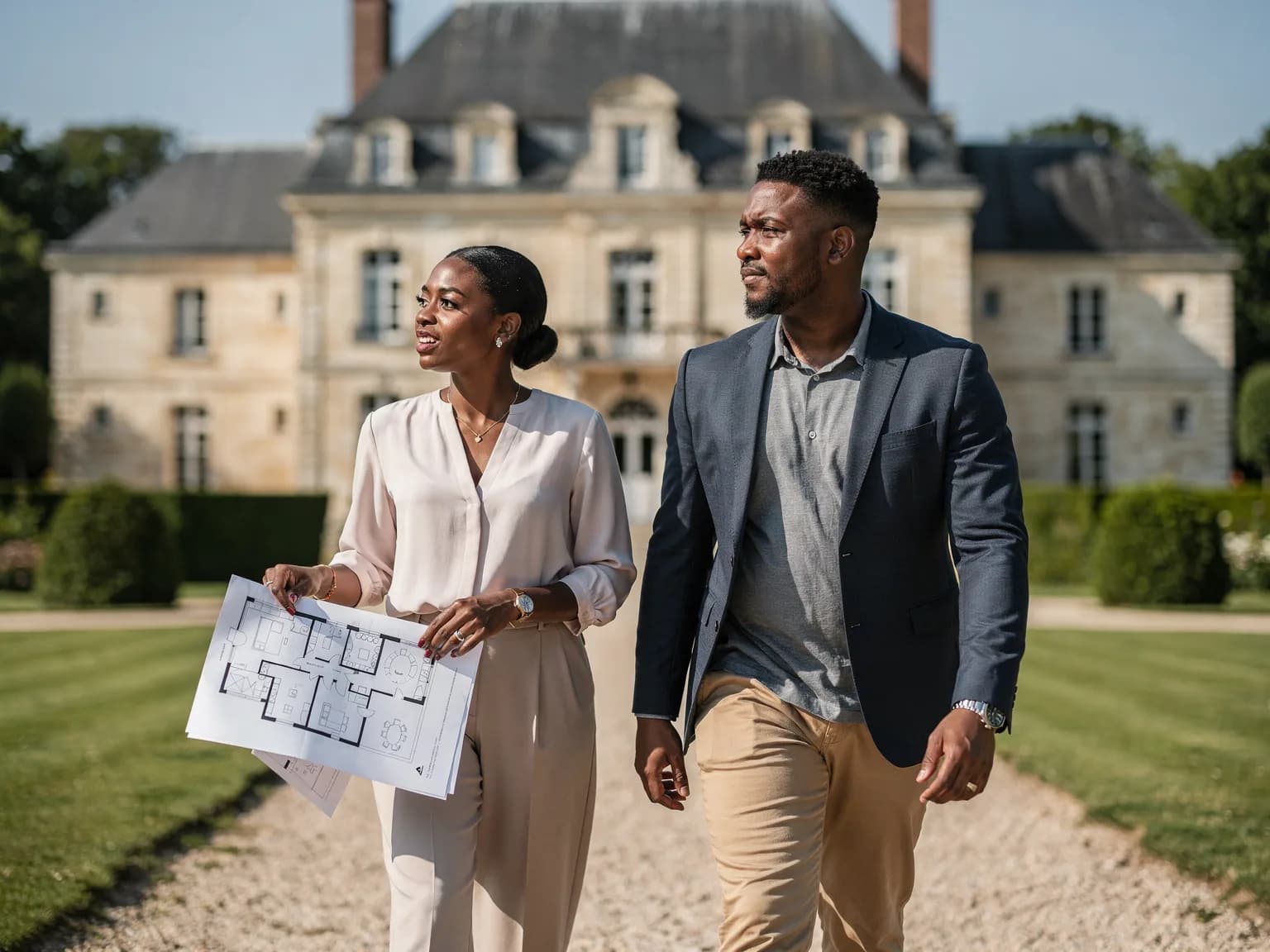
An estate visit is rarely judged on what the brochure shows. The criteria that actually decide the success of the day — and of your images — are more prosaic: the venue's orientation, internal distances, the rain plan B, imposed schedules. Here is the list I give couples who ask me what to check.
- •The orientation of the grounds — a west-facing garden means a backlit ceremony at 5 pm in summer; visit at the exact hour of your ceremony.
- •Internal distances — 400 metres between the dinner barn and the photo corner is 15 minutes lost on every round trip in heels.
- •The rain plan, for real — ask to see the fallback room set up, not in photos: your ceremony may well happen there.
- •Time and noise constraints — music curfew, exterior lights off: they shape the end of the evening and whether night shots are possible.
- •Exclusivity — an estate shared with another event the same day changes everything: get it in writing.
Send the estate's name to your photographer before signing. A map-based check takes ten minutes and catches the essentials: orientation, shaded areas, aerial-view feasibility.
Your estate from the sky: possible, under conditions
The estate's establishing shot — the grounds, the buildings, the countryside around — is precisely the image the ground cannot give. In the Paris region its feasibility depends entirely on the aeronautical chart: central Paris is excluded, airport approaches constrain part of the region, and large isolated rural estates are, conversely, the best candidates.
- •The rule that never moves — no flying over guests, whatever the configuration.
- •Checks are done estate by estate — on the aeronautical chart, before any promise; the detail of rules and zones is on the Paris-region drone wedding photography page.
The questions to ask the estate before you sign
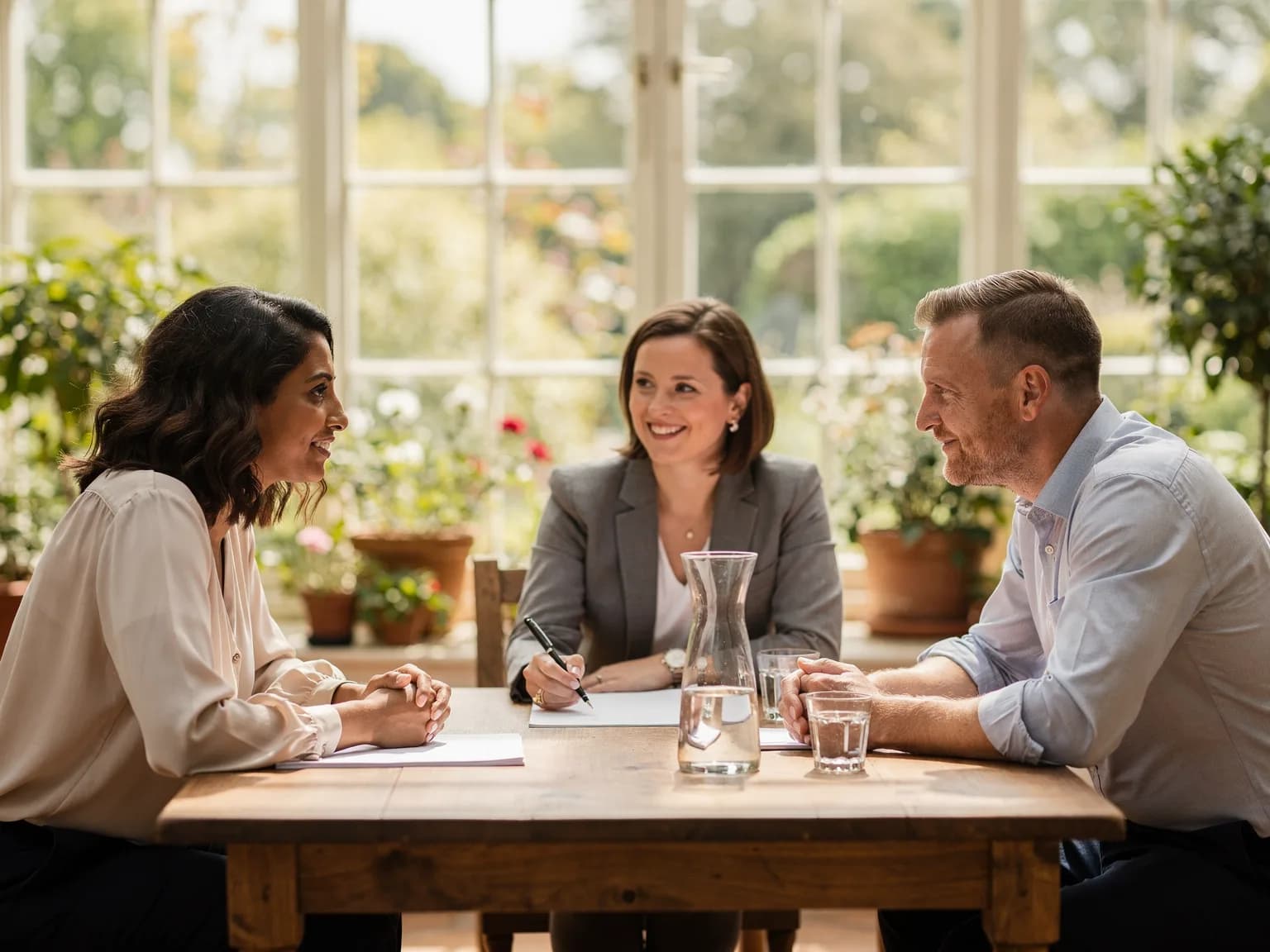
The estate's contract commits your day as much as your suppliers' contracts do. A few questions asked before signing avoid most bad surprises — and several of them directly condition the photographer's work on the day.
- •Until what time are the grounds accessible? Night shots — lanterns, fireworks, starry sky — depend on it.
- •Do suppliers get early access? A photographer covering getting-ready needs to be in before the guests.
- •Are any areas off-limits for photos? Some listed venues have them; better to know before dreaming of the staircase shot.
- •Does the venue accept drones? The estate's permission adds to aviation rules — both are necessary, neither replaces the other.
- •What exactly do exclusivity and the schedule include? In writing. It is the answer that protects all the others.
The right estate is not the prettiest one in the brochure: it is the one whose orientation, distances and rules serve YOUR day. Visit at the hour of your ceremony, insist on seeing the real rain plan, and have your photographer check the venue before you sign — ten minutes on a map saves hours of backlight. To see what these estates give in real conditions, browse the portfolio; to cost your day, the quote is free and without obligation — and the Paris-region wedding photographer page answers the questions specific to the region.
Your questions, my answers
When should you book a wedding estate in the Paris region?
The most sought-after estates book 12 to 18 months ahead for a peak-season Saturday (May to October). Book the venue first, then key suppliers — for the photographer, 6 to 12 months ahead is recommended for the same dates.
Does the photographer need to already know the estate?
No — a professional scouts the venue beforehand: orientation, shaded areas, portrait corners, indoor plan B. That scouting is part of normal preparation; communicating the venue early matters more than whether they have already worked there.
Are drone shots possible at a Paris-region estate?
Often, yes, on large isolated rural estates — in central Paris, flight is prohibited by default and requires formal authorisation from the Police Prefecture. Elsewhere, it remains subject to the aeronautical chart and the venue's agreement. Every estate is checked individually: the detail is on the Paris-region aerial wedding photography page.
Does an estate far from Paris cost more in photography?
The price of the service does not change with the venue: only travel, billed per kilometre from Paris, is added — a few tens of euros depending on the department, stated precisely on the quote.
Stay inspired
Receive my latest photos and tips for your wedding.
Have a project in mind?
Contact me to discuss your wedding and create unforgettable memories together.
Contact me