
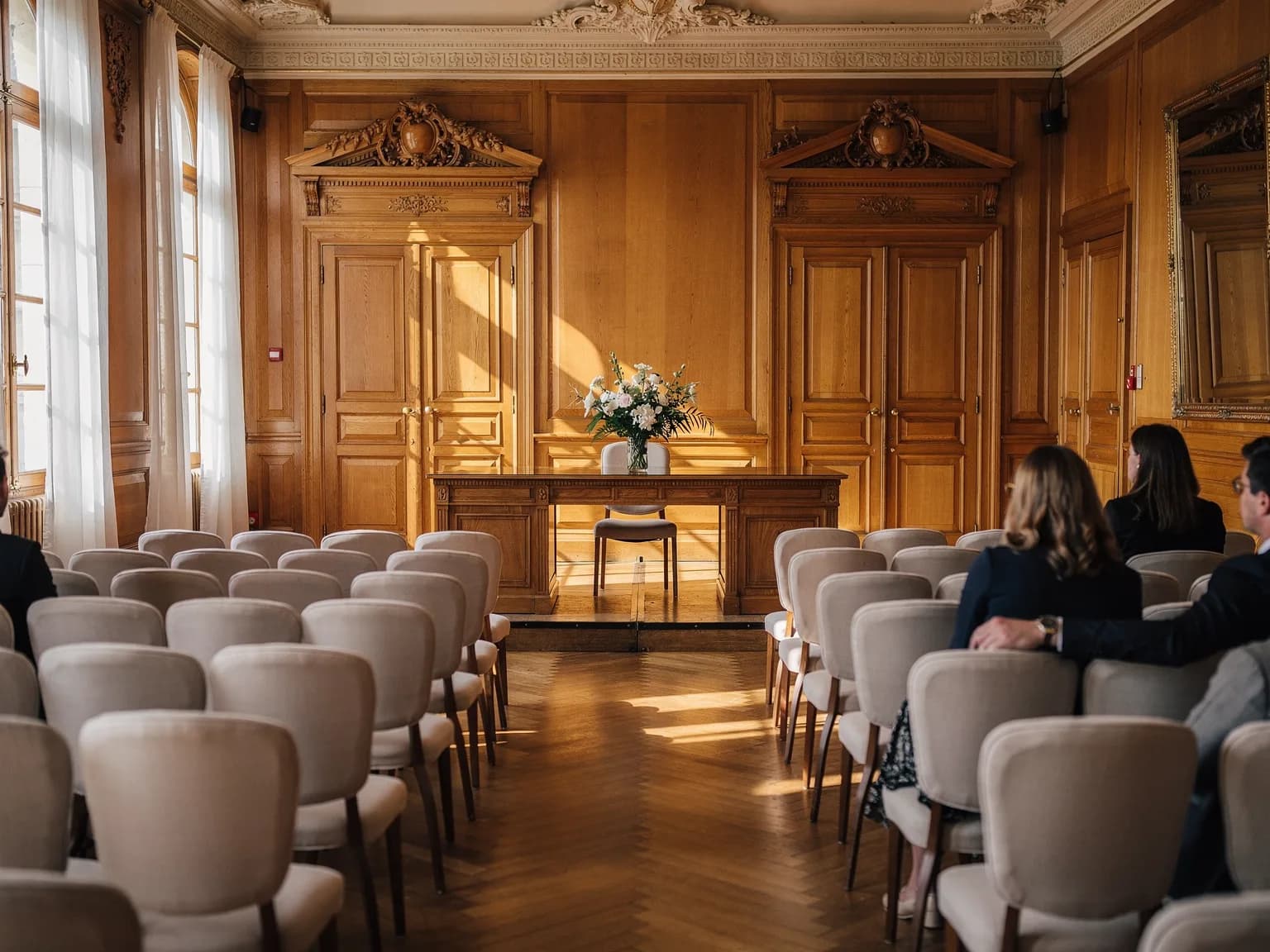
Getting Married at Versailles Town Hall: Conditions, How It Unfolds, and the Photos of the Day
The conditions for a civil wedding in Versailles, how a town-hall ceremony unfolds, and a photographer's view: the images to plan, the light constraints, and the session spots around the royal city.
Who can marry in Versailles: the commune connection rule
In France, a civil wedding is celebrated in a commune with which at least one of the two future spouses — or one of their parents — has a connection: domicile or established residence. Versailles is no exception. The file is submitted to the town hall's civil-status office, and the banns are then published for at least ten days before the ceremony can take place.
- •The commune connection — domicile or residence of one spouse, or a parent's domicile or residence: that is what opens the right to marry in the commune.
- •Prepare the file early — civil-status documents, proofs, witness list: allow several weeks between submission and the date, banns included.
- •Witnesses — at least two, at most four for the couple, adults or emancipated minors; their ID documents are part of the file.
These rules are national (Civil Code); the practical arrangements — slots, exact documents, submission deadlines — are set by each town hall. Check them directly with the Versailles civil-status office: it is the only authoritative source for YOUR file.
How a civil ceremony unfolds — and what to photograph in it
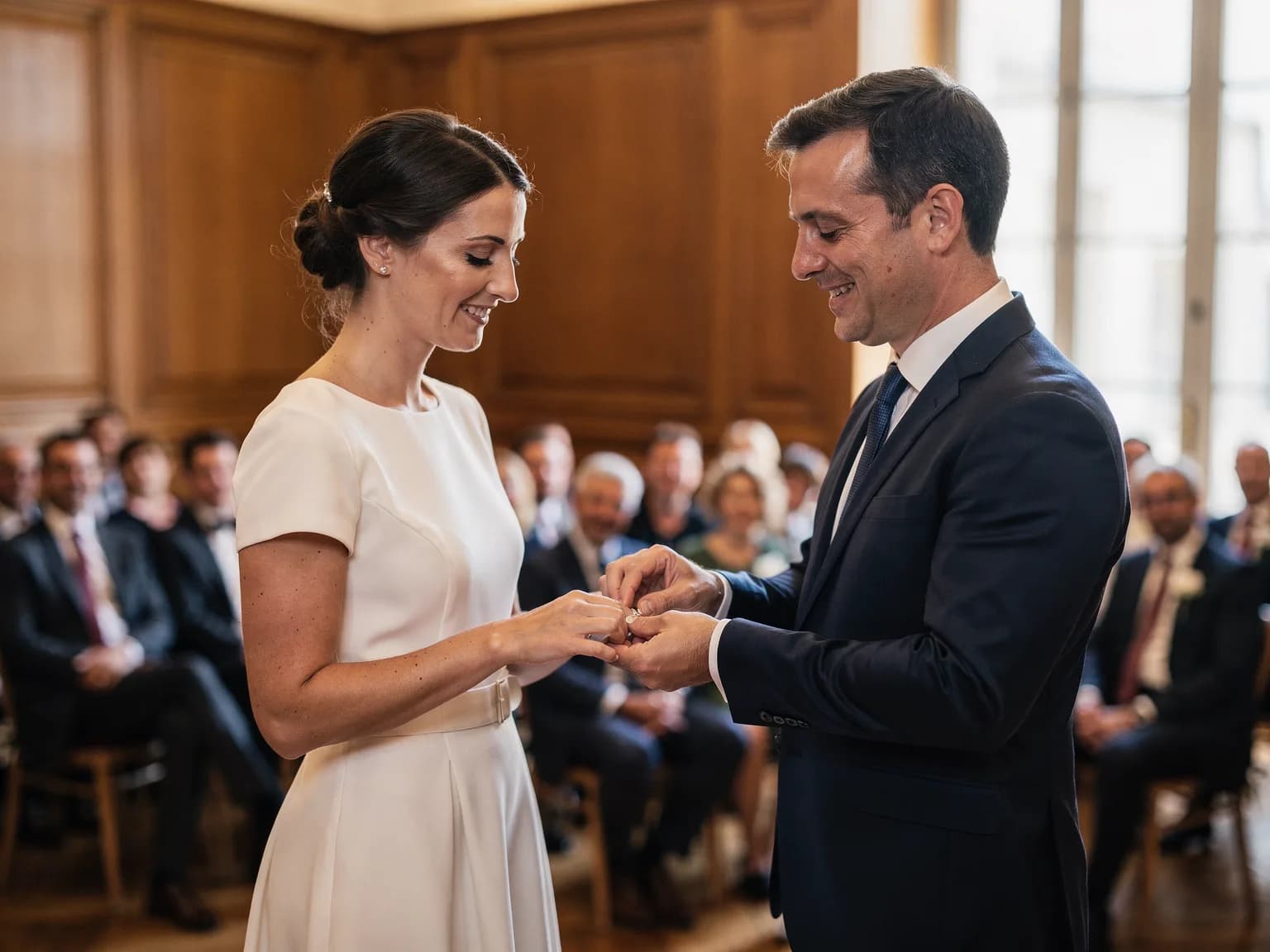
A civil ceremony usually lasts twenty to thirty minutes: reading of the Civil Code articles, exchange of consents, rings, signing of the registers, then the exit. It is short, dense, and nothing gets replayed — which paradoxically makes it one of the most demanding moments of the coverage.
- •The consents and the ring exchange — THE two images of the ceremony; the photographer positions beforehand, not during.
- •Signing the registers — couple then witnesses: a calm, posed moment, perfect for faces.
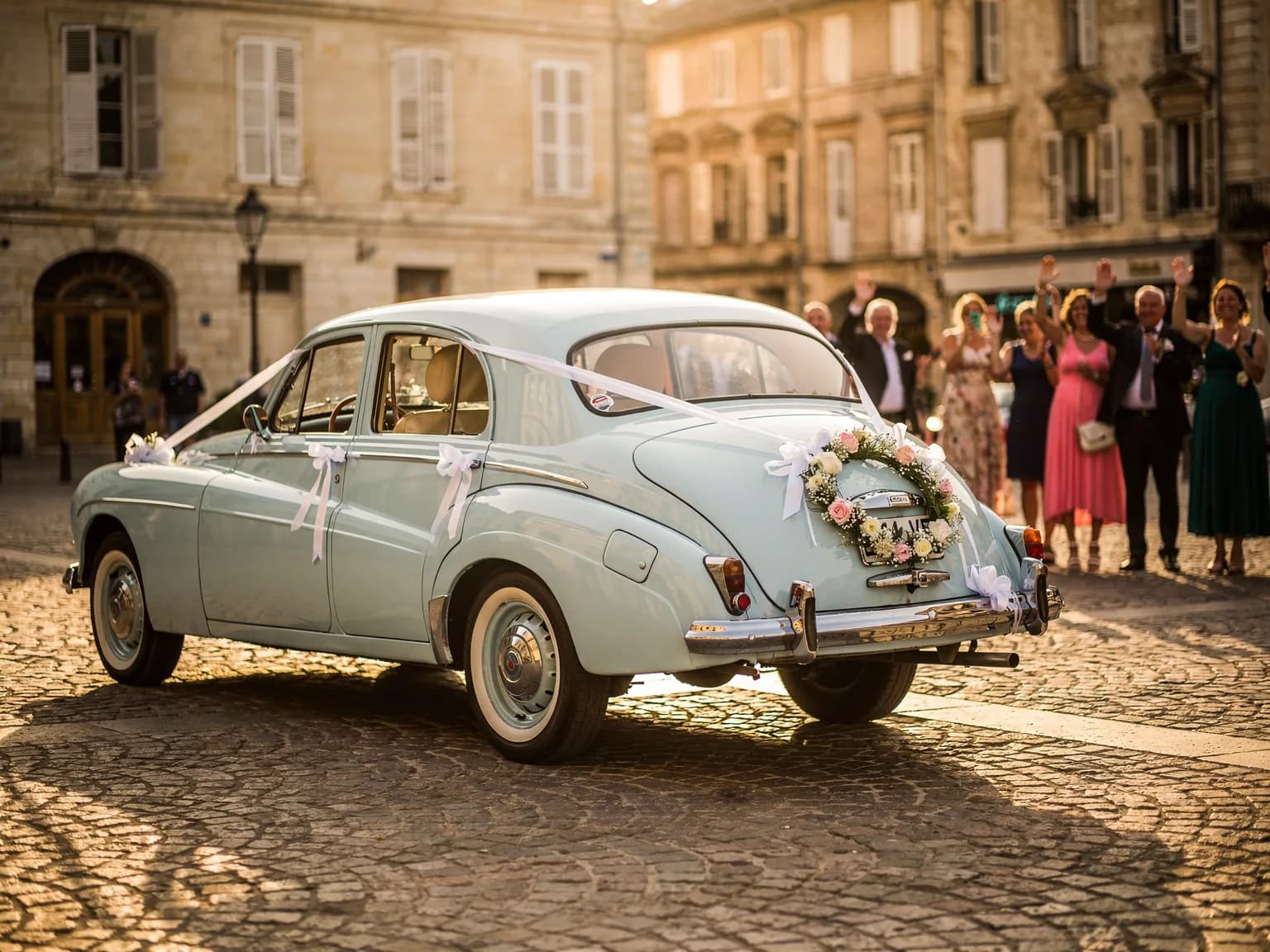
- •The exit onto the forecourt — the day's release: petals, bubbles, embraces. Brief your guests on the plan so the image is beautiful AND spontaneous.
- •Glances during the readings — parents, witnesses, clasped hands: the emotional material of the ceremony is often in the room, not at the desk.
Typical length: 20-30 min · Wedding room: indoor light, no flash during the consents
Photographing in a town hall: the light, the constraints, the solutions
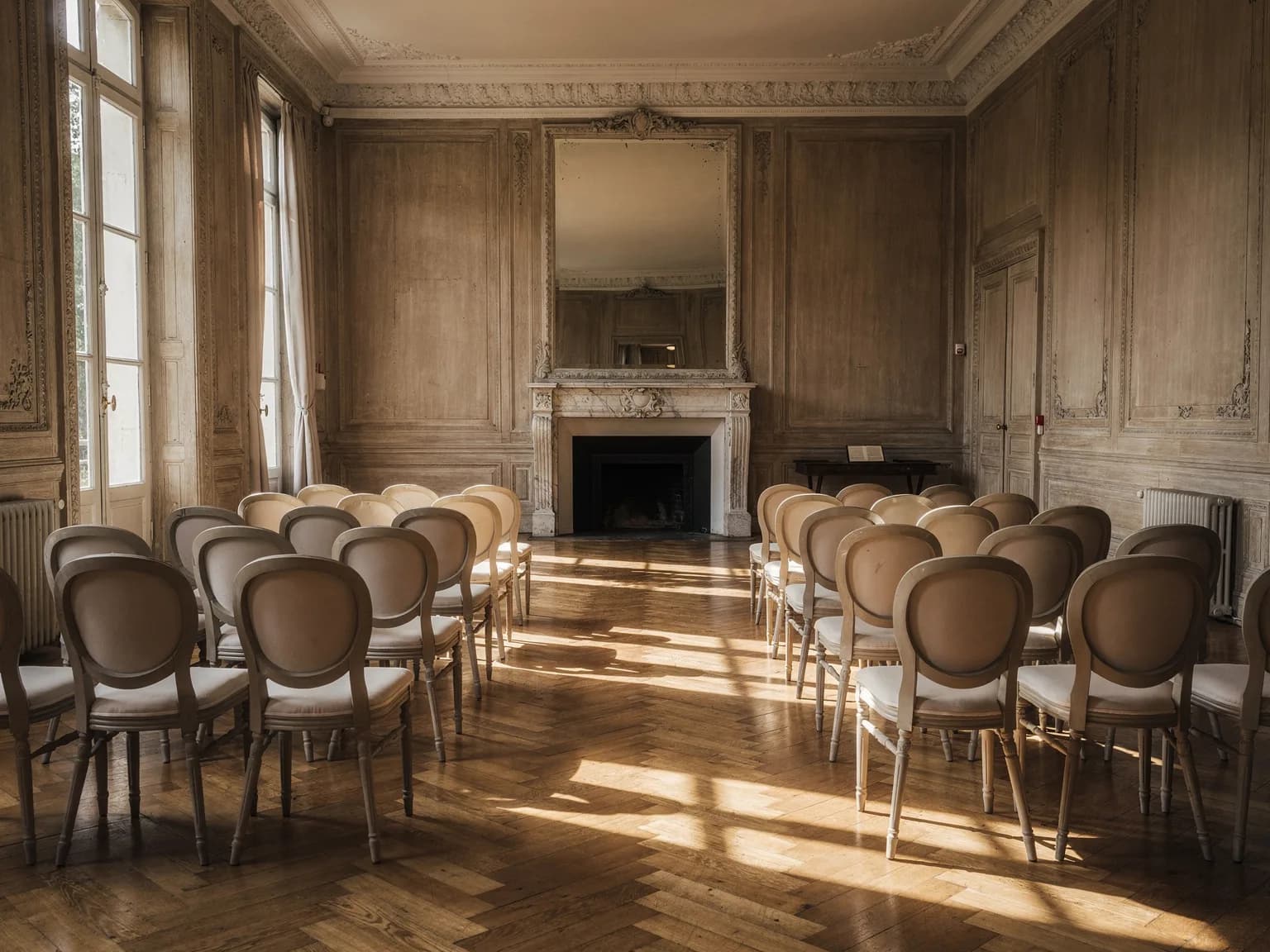
French wedding rooms are magnificent settings and light traps at once: high ceilings, dark panelling, windows on one side only, mixed tungsten and daylight. A successful coverage is prepared there — positioning, direction of light, discretion — rather than rescued in editing.
- •Arrive before the guests — scouting the room, the window direction and the officiant's position decides 80% of the ceremony images.
- •Work in natural light — no flash during the consents: the solemnity of the moment comes first, and rooms like these offer enough window light to do without.
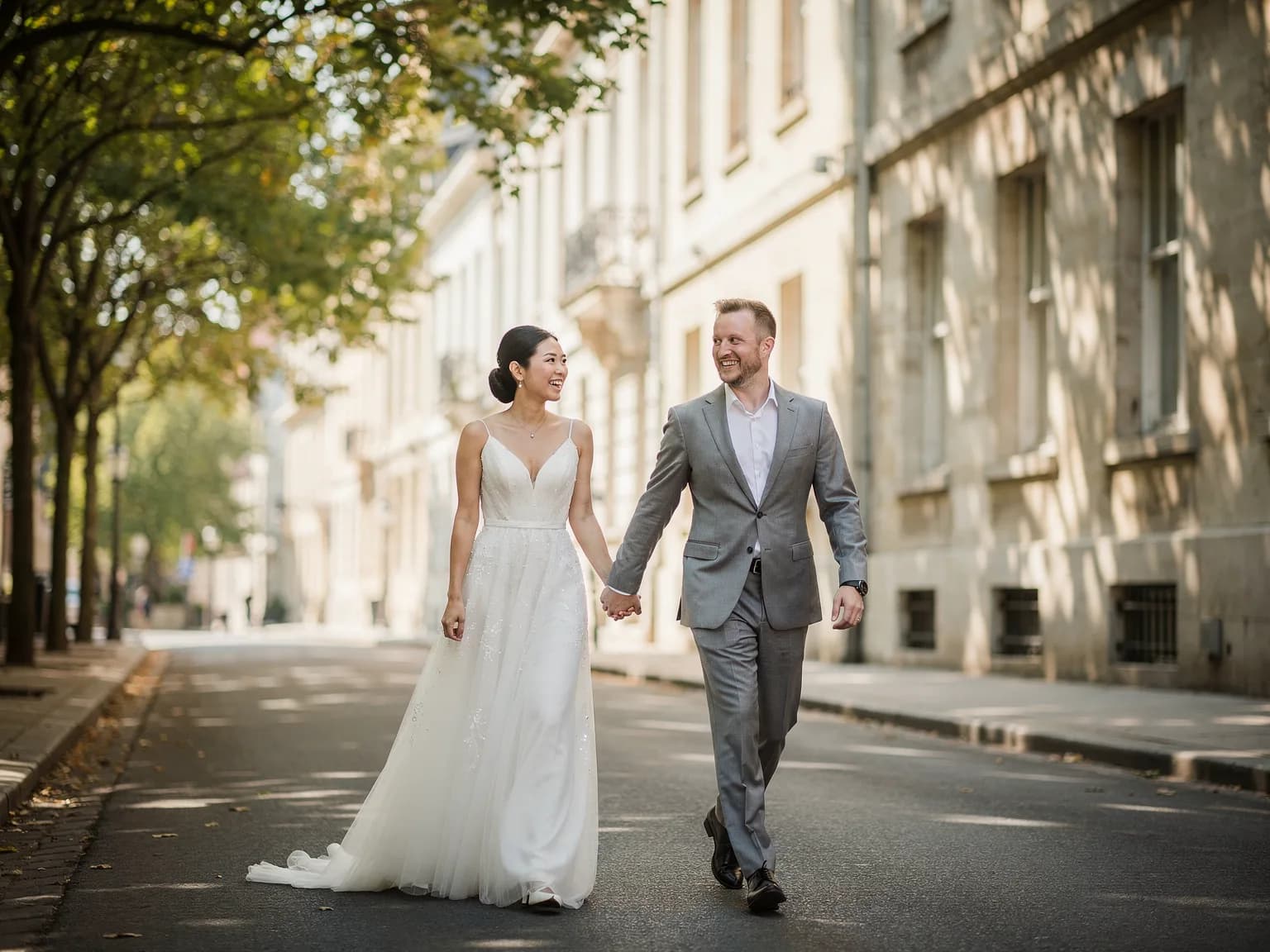
- •Plan ten minutes of portraits in the staircase or the courtyard — French civic architecture photographs superbly, and it is yours right after the ceremony.
After the town hall: session spots around Versailles
Versailles' strength for a civil wedding is that the city itself is a backdrop — not just the palace. Historic quarters, market squares, royal perspectives: a thirty-minute couple session after the ceremony is enough for images few French town halls can match as a setting.
- •The Saint-Louis quarter and its lanes — 18th-century façades, calm, human scale: the intimate counterpoint to the grand perspectives.
- •The Notre-Dame quarter and the market — lively, colourful, perfect for images in motion right after the exit.
- •The palace surroundings — the outside perspectives are free; inside the estate falls under its own regulations and authorisations: the detail is on the Versailles wedding photographer page.
Town hall then reception: the timing that works
Most couples marrying at Versailles town hall follow on with a reception in the Yvelines or elsewhere in the region. That transfer is not dead time: well planned, it absorbs the couple session and gets guests to the estate for cocktails — badly planned, it eats the golden hour.
- •Put the couple session between town hall and estate — thirty minutes in Versailles, then the drive: guests reach the cocktails, you arrive with your portraits already done.
- •Keep golden hour for the estate — it is the day's finest light; it belongs to the reception venue, not the motorway.
- •One photographer, two venues — the coverage includes town hall AND reception; inter-site logistics are built into the planning, and the regional flow is on the Paris-region wedding photographer page.
- •Town hall in Paris rather than Versailles? — the same format, in the capital, is detailed on the Paris civil wedding photographer page.
Marrying at Versailles town hall means a short ceremony in one of France's finest civic settings — provided you prepare the file early, brief the exit, and treat the transfer to the reception as part of the coverage rather than a gap. For the questions specific to the city — spots, nearby estates, palace rules — the Versailles wedding photographer page covers them one by one; and to cost your day, the quote is free and without obligation.
Your questions, my answers
Can you marry at Versailles town hall without living in Versailles?
Yes, if the commune connection exists another way: established residence of one future spouse, or a parent's domicile or residence in the commune. With no connection at all, the commune has no authority to celebrate the wedding — the rule is national, not specific to Versailles.
Can photos be taken during the civil ceremony?
Yes, discreetly: the celebration remains an official act conducted by the registrar. A professional photographer works without flash during the consents and takes position before the key moments so as never to disturb the room.
Can you do your photo session at the Palace of Versailles?
The outside perspectives and the city are free; the inside of the national estate falls under its own regulations and prior authorisations, to be prepared ahead. The city itself offers superb, immediately accessible settings — the detail is on the Versailles wedding photographer page.
How much time between the town hall and the reception?
Allow for the couple session (about thirty minutes in Versailles) plus the real drive to your reception venue. The classic mistake is compressing everything: the estate's golden hour pays the price.
Stay inspired
Receive my latest photos and tips for your wedding.
Have a project in mind?
Contact me to discuss your wedding and create unforgettable memories together.
Contact me